3 shocking ways car dealerships manipulate you (and what to do about it)
I spent more than 2 decades in car dealerships. Not selling cars, mind you — selling the idea that you needed a car. And I was very good at it.
The difference between a customer who walks onto a forecourt and walks off with the right car at the right price, versus one who drives away feeling like they’ve been fleeced, isn’t luck. It’s psychology. Theirs, and ours. We knew exactly what buttons to push because we’d spent years learning how human beings make decisions under pressure, in unfamiliar territory, with incomplete information.
This confession isn’t about making you paranoid. It’s about showing you the game so you can stop playing it the way we wanted you to.
The Dealership Is Designed to Mess With Your Head
Before you even step onto the forecourt, the space itself is working against you. Car dealership psychology is built into everything — the layout, the lighting, the air itself.
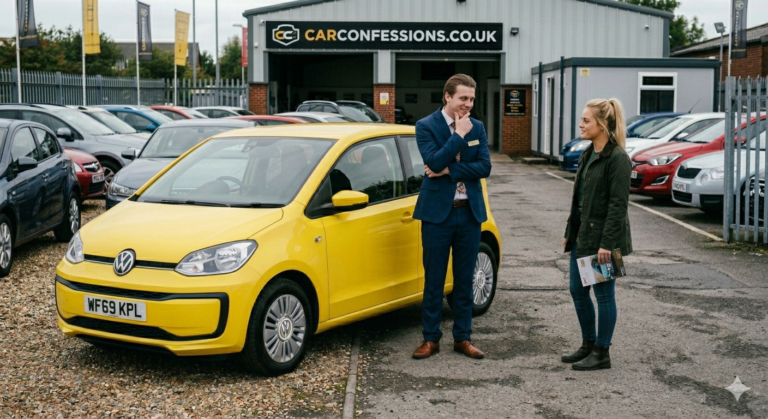
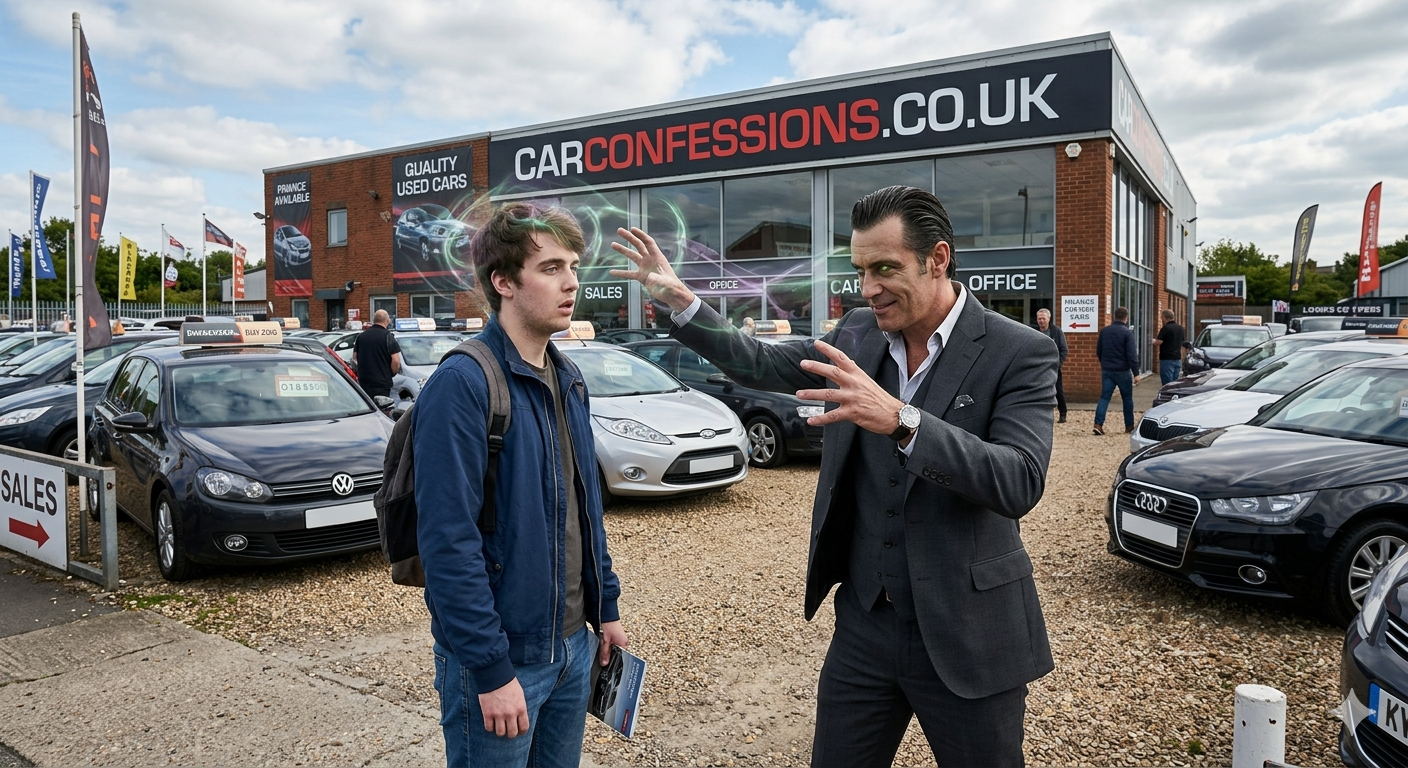
It’s designed to feel overwhelming. Rows of shiny cars, bright lights, music playing softly in the background — it’s all engineered to keep you slightly disoriented. You’re not on your territory. You don’t know the rules. And the people there? They know exactly how that feels, because they’ve designed it that way.
I used to joke that the forecourt layout was deliberate. It was. The cars are arranged so you can’t easily leave. The showroom is positioned so you have to walk past the finance office. The waiting area has uncomfortable chairs and weak coffee — because uncomfortable people make faster decisions. They want to leave, so they’ll agree to things just to get out.
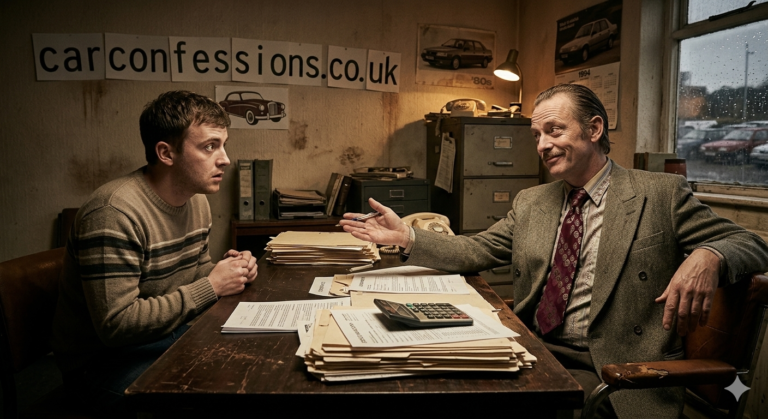
The confessional bit? We called it “the cage.” Not to our customers, of course. But that’s what we called the area where you’d sit to discuss numbers. Because once you were in there, you were trapped — not literally, but psychologically. You’d already mentally committed. You’d already imagined driving the car home. Walking out meant admitting you’d wasted an hour of your time.
The New Car Smell Trap (And Yes, It’s Deliberate)
Here’s something most people don’t realise: that “new car smell” you love so much? It’s not an accident. And it’s definitely not just a fresh car.
Car dealership psychology extends to your senses. That smell is a combination of the adhesives in the upholstery, the solvents used in manufacturing, and the plastic off-gassing. And dealerships know exactly what it does to your brain.
New car smell triggers something primal. It signals newness, safety, prestige. It makes you feel like you’re getting something pristine, something untouched. Your brain associates it with quality. It’s intoxicating — literally, you’re inhaling volatile organic compounds — and it clouds your judgment.
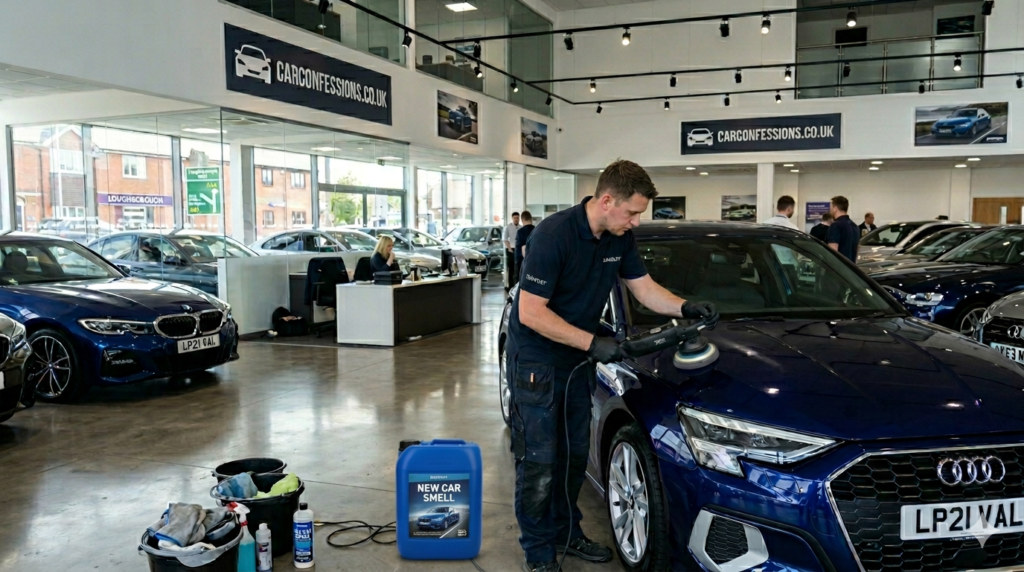
We’d use it shamelessly. On used cars, we’d use air fresheners designed to mimic new car smell. On finance meetings, we’d crack the windows open just a bit to keep that smell circulating. Some dealerships use actual new car scent sprays. The psychology is simple: the more a car smells new, the more it feels new, and the more justified you feel paying new car prices for used cars.
I sold a seven-year-old Volkswagen Golf once for nearly the price of a new one. The deciding factor? The previous owner was obsessed with keeping it smelling like a new car. Fresh air freshener every week. That smell made the buyer believe the car was worth more than it actually was.
But here’s the thing that used to make me laugh — and this is the real confession: after about three weeks of owning that car, the customer would stop noticing the smell. They’d become immune to it. The psychology would wear off.
We knew this. That’s exactly why we kept it strong. Because by the time they realised they’d overpaid, it was too late. The smell was gone. The new car feeling was gone. And they were stuck with a seven-year-old car at new car prices.
The smell of the polish fades in three weeks. But the customer keeps smelling it when they first drive it home. And that’s the whole point. We don’t need you to be fooled forever. We just need you to be fooled long enough to sign the paperwork.
That’s car dealership psychology in action.
The Sunk Cost Fallacy Is Your Biggest Enemy
Here’s the thing about car buying: by the time you’re negotiating price, you’ve already invested emotional energy. You’ve walked around the car, sat in it, maybe even driven it. You’ve imagined yourself in it. That’s not an accident.
This is called the sunk cost fallacy, and it’s brutal in car buying. The more time you’ve spent, the more likely you are to justify finishing the transaction. “I’ve already been here two hours, I’ve already fallen in love with that new car smell, might as well just go through with it.”
We knew this. We’d deliberately take our time with you. We’d let you sit in the car longer. We’d let you imagine. We’d make sure you took it for a drive so you could experience that feeling of driving a car that feels new. Then, when the numbers came up — and they always came up higher than you expected — you’d be more likely to accept them. Because walking away meant throwing away all that emotional investment.
The dealership staff aren’t rushing you by accident. They’re using time against you.
Three Psychological Tricks We Used (And Still Work)
1. Anchoring
The first number you hear becomes your reference point. This is anchoring, and it’s why dealerships always quote a high price first.
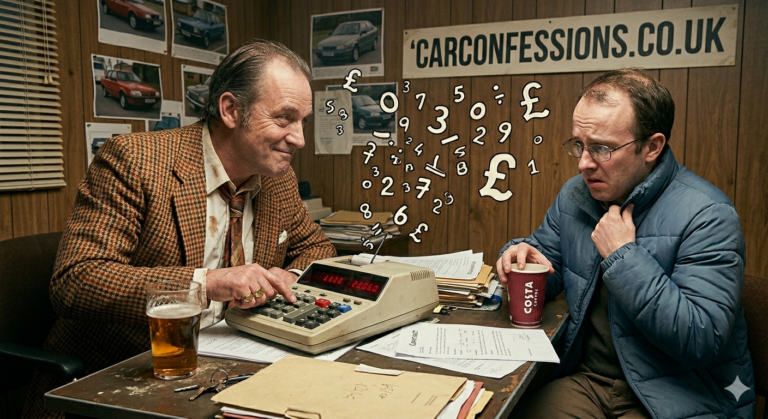
Here’s how it works: I’d give you a price that was higher than what I was actually hoping to get. You’d react with shock. Then, when I came down £2,000, you felt like you’d won. You felt good about the deal. But I’d still made my margin because I’d anchored you to a number that was never realistic.
The worst part? You’d tell your mates you “negotiated them down by two grand.” You felt victorious. I made my profit. Everyone was happy.
Except you. Because you paid more than you would have if I’d simply given you the real price from the start.
2. Scarcity and Urgency
“I’ve got another customer coming in at three to look at this one. If you want it, we need to move quickly.”
Sometimes it was true. More often, it wasn’t. But it didn’t matter. The human brain is wired to fear missing out. Scarcity and urgency override rational decision-making. See my article on phrases that Car Dealerships use
We’d use this on finance terms, on colours, on specific cars. “This is the only silver one we have right now” (even if we had three in the back). “These rates won’t last long” (they absolutely would). “I can only hold this price until the end of the day” (obviously I could, but the psychology worked).
You’d make a faster decision under pressure. And faster decisions are worse decisions. That’s why we created pressure.
3. The Authority Figure
I wasn’t always salesman in the traditional sense. I was a business manager. That title mattered. It gave me authority. People trust authority figures more than they trust salespeople — even though I was literally a salesman.
We’d also use the manager as a psychological tool. “Let me just check with my manager,” I’d say, disappearing for fifteen minutes. When I came back, I’d come back with “bad news” — a slightly higher price or a reduced offer on your trade-in.
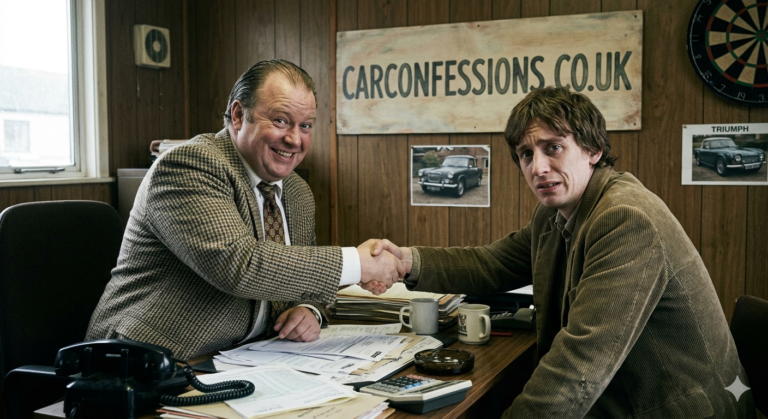
This served two purposes. First, it removed me as the villain. I wasn’t being difficult — my manager was. Second, it made you trust me more. I’d just “fought for you” against the manager. We were on the same team now. That psychological shift made you more likely to accept the deal I presented.
The authority of the manager was real, but the fight I supposedly had on your behalf? Usually fiction.
What This Means for You
Here’s what I learned about buyer psychology at car dealerships, and what you need to know:
Emotions drive car buying more than logic. You don’t make a rational decision about cars. You make an emotional one, then justify it with logic afterward. The dealership knows this. They’re not selling you transport — they’re selling you an identity, a feeling, a story you tell yourself about who you are. That new car smell is part of that story.
That’s not evil. That’s just business. But it means you need to separate the emotion from the decision.
Time is a weapon. The longer you spend at the dealership, the more likely you are to agree to something you wouldn’t agree to under calm, deliberate circumstances. Set a time limit for yourself. If you haven’t done a deal in two hours, leave. Walk away. Come back another day. You’ll have more power on day two than day one.
First numbers are lies. The first price you’re quoted, the first trade-in valuation you’re offered, the first finance rate you’re shown — none of it’s the real number. It’s an anchor. Ignore it. Research the market independently. Know what the car is worth before you walk in. Know what you can afford. Then negotiate from those numbers, not from theirs.
Urgency is the enemy of good decisions. If a car dealership is pushing you to decide today, that’s a red flag. A good deal today is a good deal next week. Walk away from pressure. The best negotiators are the ones who can afford to leave.
You need to separate yourself from the sale emotionally. Before you go to the dealership, decide: “I am going to walk away if the numbers don’t work.” And mean it. Not as a negotiating tactic. As an actual plan. Because the moment you feel like you’ve invested too much time or emotion, your judgment goes out the window.
The Thing I Regret
I was good at this game. I understood human psychology, and I used it to make people buy cars they might not have bought, at prices they might not have paid, with finance they didn’t always need.
Did I break any laws? No. Did I manipulate people? Yes. Is the difference clear? It shouldn’t be.
The worst part wasn’t the money I made. It was the realisation, years later, that I’d become good at persuading people against their own interests. I’d learned to read people so well that I could identify their pressure points and exploit them. I could walk someone onto a forecourt and know within five minutes exactly what would make them sign, from the new car smell to the type of music playing in the background.
That’s the psychology of car selling. And now you know how it works.
So the next time you walk onto a forecourt, remember: they’ve thought about every aspect of this interaction longer than you have. The space is designed to unsettle you. The timing is designed to pressure you. The numbers are designed to anchor you. The smell is designed to seduce you. And the person talking to you has spent hours learning how to read your emotional state and exploit it.
Armed with that knowledge? You’ve already won half the battle. Remember to check out the car before you even visit car dealerships – see my guide here
Confession
I was genuinely brilliant at understanding what made people tick. The irony is that understanding human psychology this well made me realise I didn’t want to use it that way anymore. These days I use it to help people see through the tricks. It’s not as profitable. But I sleep better.
Buying a used car? Don’t forget: