Why you should never mention your trade-in before agreeing a price
The short version: never mention your trade-in until after you’ve agreed a price on the car you’re buying. Here’s why.
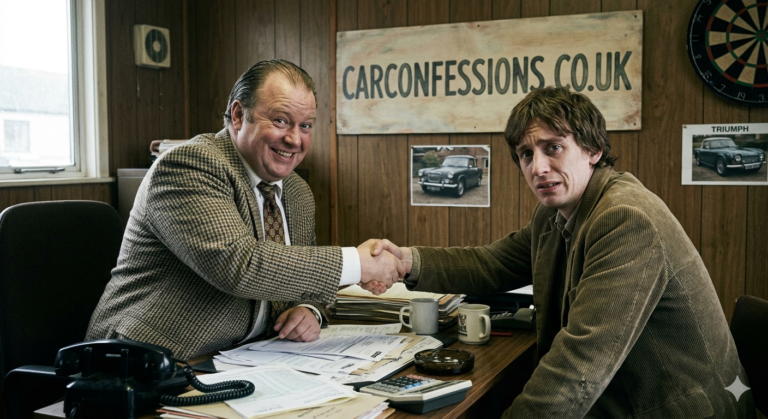
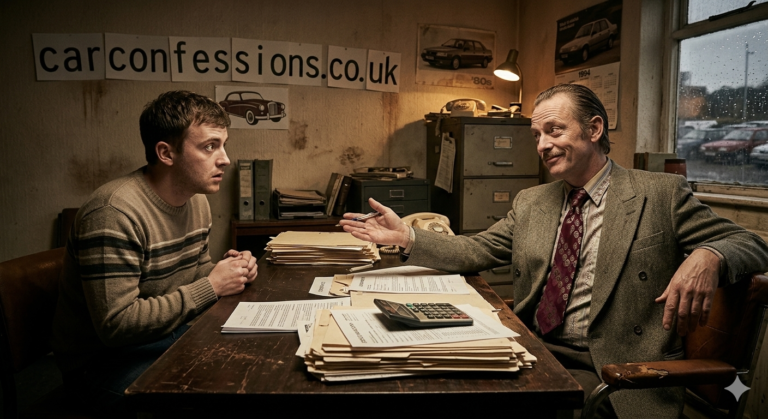
There’s a moment in every used car negotiation where the dealer leans back, smiles, and says: “So — have you got anything to part-exchange?”
It feels like small talk. It isn’t.
That question is a lever. And the moment you answer it honestly — before you’ve agreed a price on the car you’re buying — you’ve handed them four separate ways to make money out of you that you probably won’t even notice.
I know, because I used to ask it myself.
The shell game explained
When a dealer is negotiating with you, there are actually two separate deals happening at once: the price of the car you’re buying, and the value of the car you’re selling them. Most buyers think of it as one conversation. Dealers think of it as four levers:
- The selling price of the car you’re buying
- The trade-in value they offer you for your car
- Finance payments if you’re buying on finance
- Add-ons — warranties, GAP insurance, paint protection
If you mention your part-exchange upfront, a skilled salesperson can adjust any of those four levers while keeping the overall deal looking attractive to you. They’ll give you a fantastic price on your trade-in — and quietly hold firm on the sale price. Or they’ll drop the sale price and quietly undervalue your car. The numbers dance. Your eye follows the big ones. The small losses slide past.
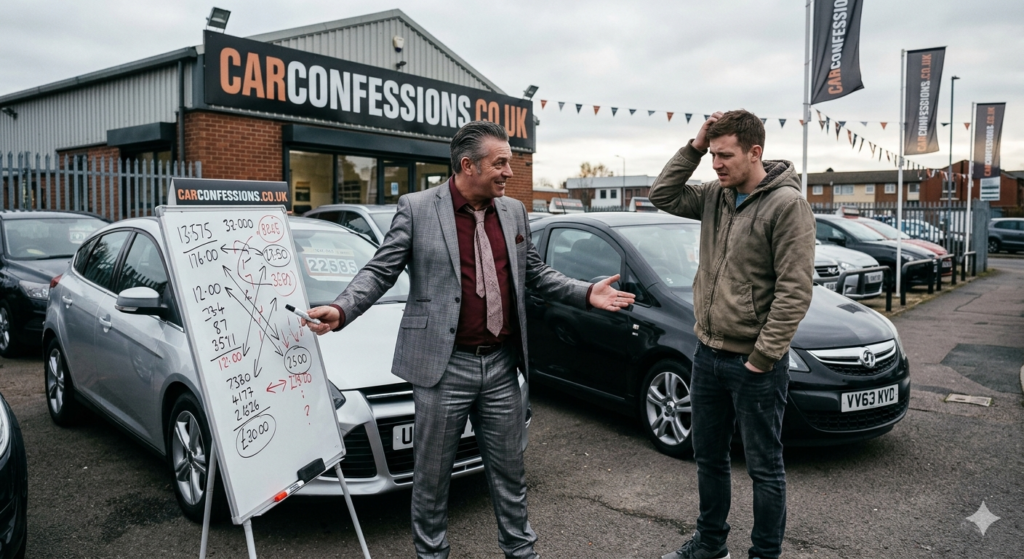
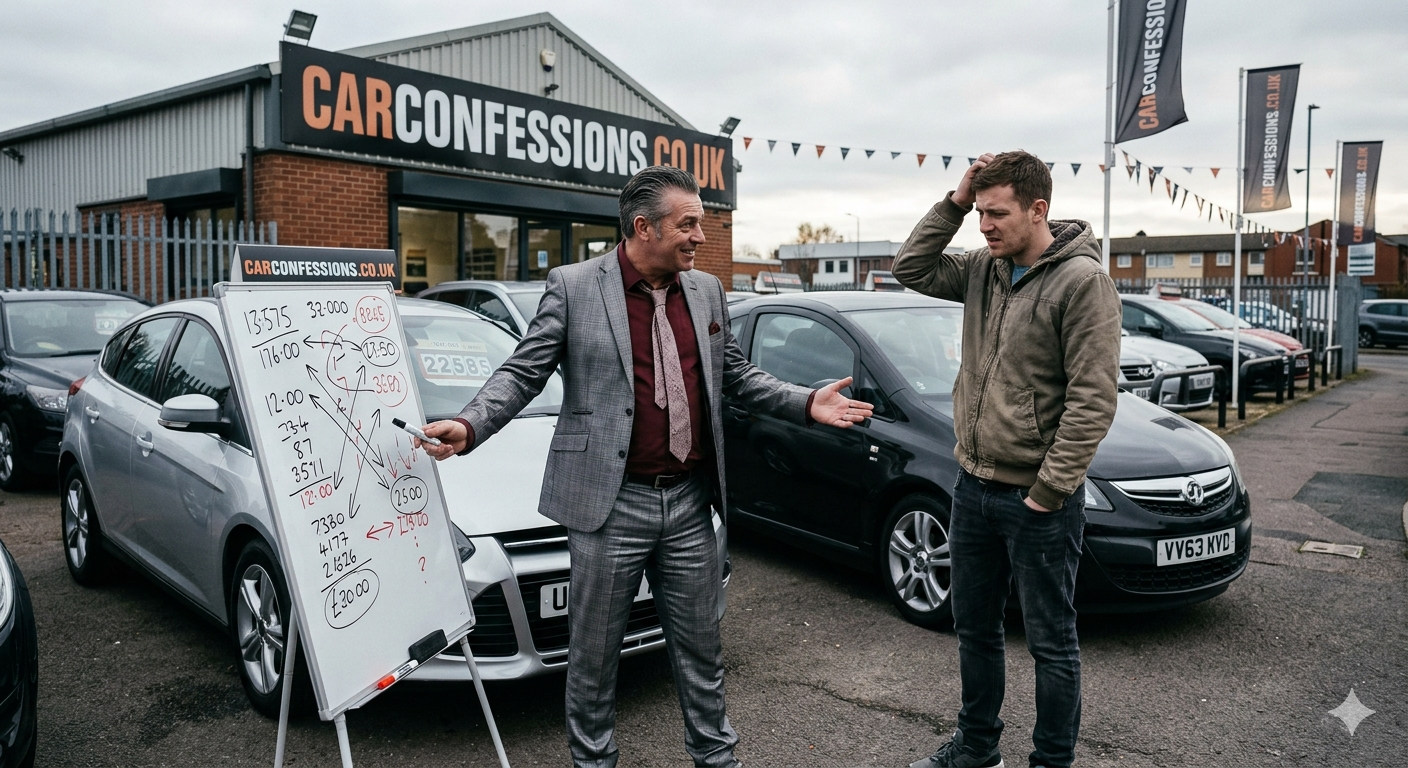
The headline “we’ll give you £2,000 for your car” sounds great until you realise you just paid full asking price for a car that had £1,500 of negotiation room in it.
What happens in practice
Here’s a scenario I saw play out hundreds of times. Buyer walks in wanting a £12,000 hatchback. Car has about £800 of negotiation room in it — the dealer would genuinely take £11,200. Buyer mentions upfront that they’ve got a Focus to trade in.
The salesperson does a quick mental calculation. They know what the Focus is worth. Let’s say it’s worth £3,500 trade. Now they’ve got a combined deal to work with. Instead of giving £800 off the sale price and £3,500 for the trade-in (total benefit to buyer: £4,300), they offer a cracking £4,200 for the Focus — “because we’ve got a customer waiting for one” — and hold firm at £12,000 on the car.
The buyer feels like they’ve won. They’ve got £700 more for their Focus than they expected. What they’ve missed is the £800 they left on the table on the car they bought.
Net result: dealer is £1,500 better off than they needed to be. Buyer feels great.
The right order of operations
This is genuinely simple once you know it. Just do everything in the right order:
Step 1: Agree the price of the car you’re buying
Negotiate that down as far as it’ll go with no mention of any trade-in. Get a firm, agreed price in writing (or at least confirmed clearly). “So we’re agreed — £11,200 for the Focus?” Yes? Good. Now move on.
Step 2: Introduce the trade-in
Only now do you say: “Right, I do actually have a car to part-exchange as well.” At this point the deal on the car you’re buying is locked. The only negotiation left is what they’ll give you for yours — and that’s a separate, cleaner conversation.
Step 3: Know your trade-in’s value before you walk in
Get at least two quotes before visiting any dealership. Motorway, We Buy Any Car, or a local independent dealer will all give you a fast valuation. That becomes your floor. If the dealer won’t match or beat it, you sell your car privately or through those services and walk away with cash in hand.
Knowing your car’s trade value before you go in is the single biggest thing you can do to protect yourself in a negotiation. It takes ten minutes and it’s free.
What about online car retailers?
If you’re buying from somewhere like Cazoo, Cinch, or a similar online retailer, the dynamic is slightly different — the pricing tends to be fixed rather than negotiated. But the trade-in principle still applies. Get an independent valuation for your car before you accept whatever their part-exchange tool spits out. Those tools are not designed to be generous.
The “we’ll sort out your car” stall
One more thing to watch for. If you try to negotiate the sale price first and the salesperson keeps steering the conversation back to your trade-in — “let’s just get the full picture of the deal” — that’s deliberate. They want the whole thing in play at once. That’s your cue to be politely firm: “Let’s get the price agreed on this one first, then we can talk about my car.”
If they won’t engage with that, it’s a yellow flag. A dealer who genuinely has a good car at a fair price doesn’t need to muddy the waters.
Does this work every time?
No. Some dealers price to market and there’s not much room to move regardless. Some are completely transparent and would give you the same deal either way. But you have no way of knowing which you’re dealing with until you’re in the room — so the sensible move is to protect yourself by default.
It costs you nothing. It might save you hundreds.
Frank’s confession
I once spent a full afternoon with a couple who were clearly decent, careful buyers. They’d done their research, they knew what the car was worth, they came in prepared. And then right at the start they mentioned the Mondeo they were trading in, and I watched my manager’s eyes light up. We gave them a great price on the Mondeo. We gave them nothing on the car. They drove away happy. I’ve thought about that deal more than once since I left the industry. They deserved better. Most buyers do.
Before you go to any dealership, run an HPI check on the car you’re planning to buy — it’ll tell you if it’s got outstanding finance, been in a write-off, or had its mileage tampered with. Check any used car with HPI here — it’s the one thing worth paying for before you hand over a penny.
Got a trade-in horror story — or did you successfully play it the right way and save yourself a packet? Drop it in the comments.
Want to protect yourself further? Read our guide to the 7 used car checks every buyer must do, and our breakdown of HP vs PCP car finance to make sure you understand all your options before you sign anything. For further independent advice on your rights when buying a used car, Citizens Advice has a useful guide.
One Comment