7 Ways to Negotiate the Price of a Used Car (From Someone Who Was on the Other Side)
If you want to know how to negotiate the price of a used car, you could read one of the hundreds of generic guides online. They’ll tell you to “do your research” and “be confident” and “don’t be afraid to walk away.” Thanks for that. Very helpful.
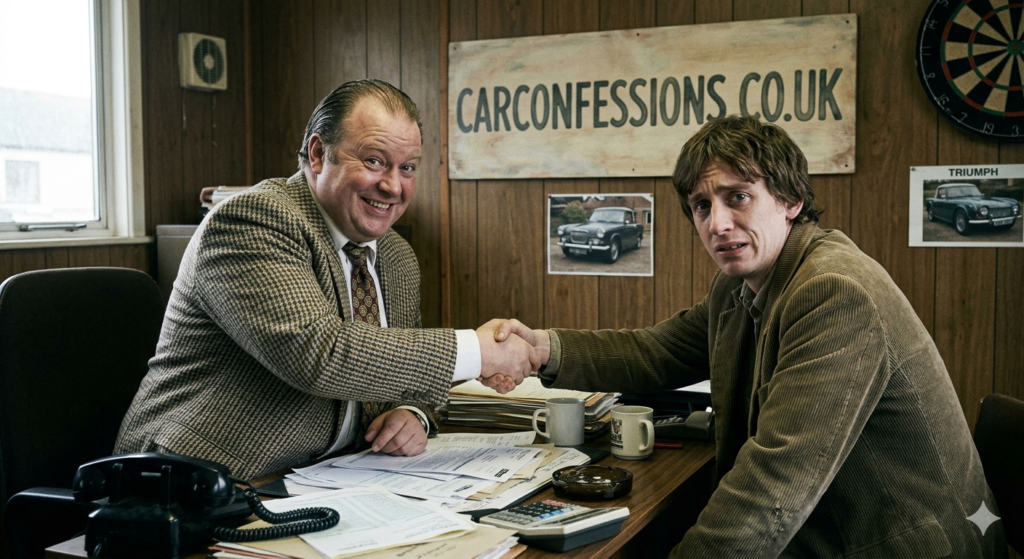
Or you could hear it from someone who spent years on the other side of the desk — fielding the haggles, dodging the tactics, and occasionally enjoying himself a little too much when buyers got it wrong.
Here’s what actually works. And here’s what doesn’t.
The cash myth — let’s kill it now
The single most common opening gambit from a used car buyer is some variation of: “What will you knock off for cash?”
I’ll tell you exactly what I used to say: “I’ll knock the wing mirrors off for cash.”
It got a laugh about half the time. The other half, not so much. It probably cost me a sale or two. I regret nothing.
Here’s why the cash question doesn’t work anymore: dealers can’t hide cash. That was the assumption behind it — that physical notes meant untraceable profit, something that could disappear into a back pocket without going through the books. Those days are long gone. HMRC, anti-money laundering regulations, and basic modern banking have put paid to all of that.
And here’s the other thing: it costs a dealer as much to bank a pile of cash as it does to process a debit card payment. In some cases more, because cash handling has its own admin overhead. There is no financial incentive for a dealer to prefer your £8,000 in notes over your £8,000 bank transfer.
So if you walk in waving cash, expecting the price to magically drop, you’re negotiating with a myth. You’re not the savvy buyer you think you are. You’re the person the dealer will politely smile at while mentally ticking the “hasn’t done their homework” box.
Leave the cash at home. Pay by debit card or bank transfer like a normal person. Negotiate on the things that actually matter.
Do your homework — properly
This one is real advice, not a platitude. But there’s a right way and a wrong way to do it.
The right way: go on AutoTrader before you set foot near a forecourt. Search for the same make, model, year, mileage, and spec as the car you’re looking at. See what comparable examples are actually selling for. Not asking for — selling for. There’s a difference, but asking prices give you a decent benchmark.
If the car you’re looking at is priced in line with the market, there isn’t a lot of room. If it’s priced above comparable examples, you’ve got something to work with.
The wrong way: making up a number. “I think it’s worth £1,000 less than you’re asking” is not a negotiating position. It’s a guess. A good dealer will ask you where you got that figure. If you can’t answer, you’ve lost the conversation before it’s started.
Know your numbers. Have evidence. Be specific. “I’ve seen a nearly identical one on AutoTrader for £X” is a sentence that opens doors. “I just think it’s a bit dear” is a sentence that closes them.
The one phrase that actually moves dealers
I’ll give you this one for free, because it’s the thing that genuinely used to make me sit up and pay attention when a customer said it.
“I’ll do a deal today if you can match the price I’ve seen elsewhere.”
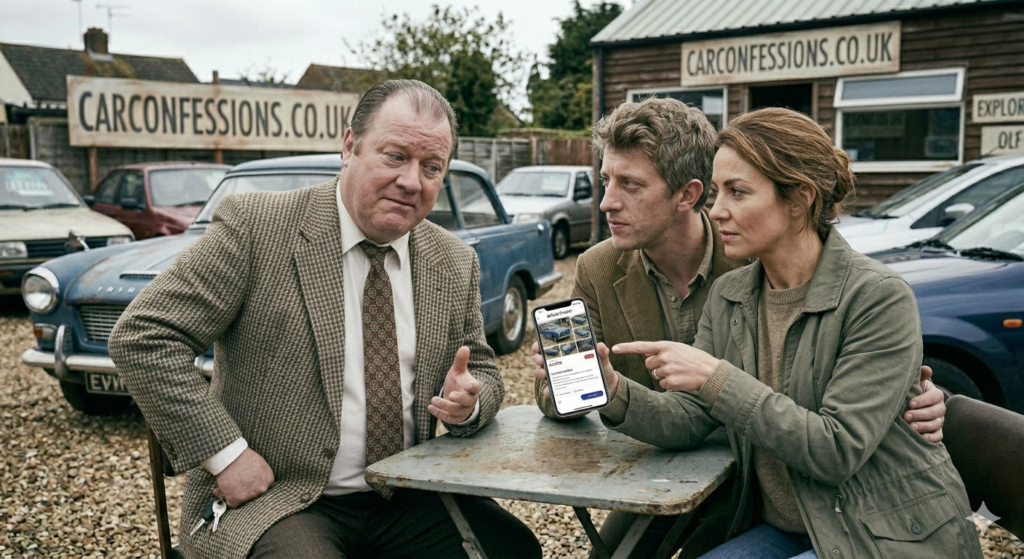
That’s it. That’s the magic. Not because it’s clever wordplay, but because of what it tells the dealer:
- You’ve done your research and there’s a real alternative
- You’re serious — you’re not kicking tyres, you’re ready to buy
- There’s a clear condition — meet this number and we’re done
Dealers work on monthly targets. A sale today is worth more than a sale next week. Commission structures, manufacturer bonuses, end-of-month targets — all of it means that a buyer who is ready to commit right now has leverage that a buyer who’s “just looking” simply doesn’t have.
Be that buyer. Come in ready to shake hands. Make it easy for them to say yes.
Be prepared to walk away — but mean it
Every negotiating guide tells you to be prepared to walk away. What they don’t tell you is that it only works if you actually mean it.
Dealers can read people. It’s literally the job. They know within about three minutes whether you’re emotionally attached to the car. They know if you’ve been looking for six months and this is the first one that ticks all your boxes. They know if your 18-year-old daughter has already picked out the colour and is texting her friends about it from the passenger seat.
If you’re attached, the leverage shifts to them. Not completely — they still want to make a sale — but your ability to credibly threaten to walk is significantly reduced.
The practical advice: if you’re going to negotiate, do it before you fall in love with the car. Do it before the test drive if you can. And if you are going to walk away as a tactic, actually walk. Get in your car. Drive away. See what happens.
Sometimes nothing happens. Sometimes your phone rings before you’ve reached the end of the road.
What dealers can actually move on
Price is the obvious one, but it’s not the only lever. If a dealer won’t move on the headline price — and sometimes they genuinely can’t, especially on well-priced stock — there are other things you can negotiate on:
A full tank of fuel. Sounds small. On a big diesel it’s £80-£100. Worth asking.
A fresh MOT. If the MOT is due in a few months, ask them to put a new one on it before handover. Costs them very little, saves you the hassle.
A service before collection. Same logic. If it’s due a service, ask them to do it. The worst they can say is no.
Mats, extras, accessories. Floor mats, a spare key, a tow bar fitting. Small things that have real value to you but low cost to them.
Warranty extension. If they’re offering a 3-month warranty, ask for 6. Or 12. Again — worst they can say is no.
Price is one dimension. The deal is the whole package.
What doesn’t work
While we’re here, a quick list of things that genuinely don’t impress dealers and won’t help you:
Telling them what you paid for your last car. Nobody cares.
Criticising the car to bring the price down. Pointing out every scratch and mark as if you’re building a case. Dealers know the car’s condition better than you do. This approach annoys them and makes you look difficult, not smart.
Making an insulting opening offer. If a car is £10,000 and you open at £7,500 with a straight face, you’ve ended the conversation before it’s started. Anchor low by all means — that’s just good negotiating — but stay in the realms of serious. Nobody can negotiate with a fool, and nobody will try for long.
Bringing a “friend who knows about cars.” This one is fine if the friend genuinely does know about cars and is there to inspect it mechanically. It’s not fine if the friend is there to play bad cop and talk the car down. Dealers see this every week.
Saying you’ll pay cash. See above.
The confession
I genuinely used to enjoy the negotiation. Not because I wanted to fleece anyone — mostly I didn’t — but because it was the most honest part of the whole process. Two people, openly wanting different things, trying to find a number they can both live with.
The buyers who were best at it were the ones who came in prepared, stayed calm, knew what they wanted to pay, and made it easy to say yes. They didn’t bluster. They didn’t insult the car. They just made a reasonable case and gave me a reason to close the deal.
Be that buyer. Know your number. Be ready to shake hands. And for the love of everything, leave the cash at home.
Before you negotiate anything, make sure the car is clean — run an HPI check first →
Before you start haggling, make sure you know what you’re haggling over. Read the 7 checks every used car buyer must do before handing over a penny — some of them will give you extra ammunition at the negotiating table.
Also worth knowing: why you should never mention your trade-in before agreeing a price — get the car price sorted first, every time.