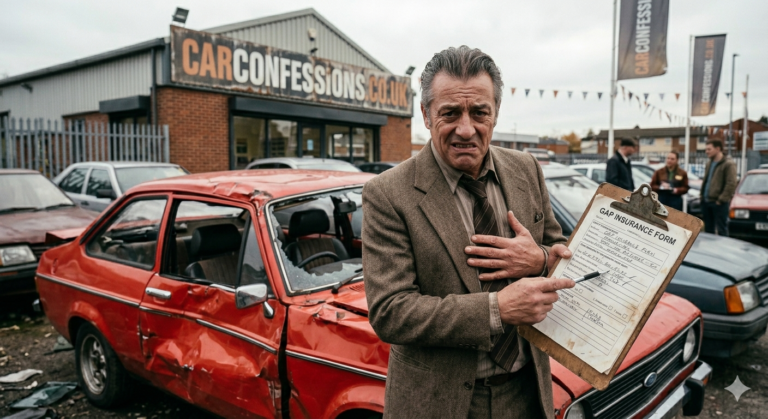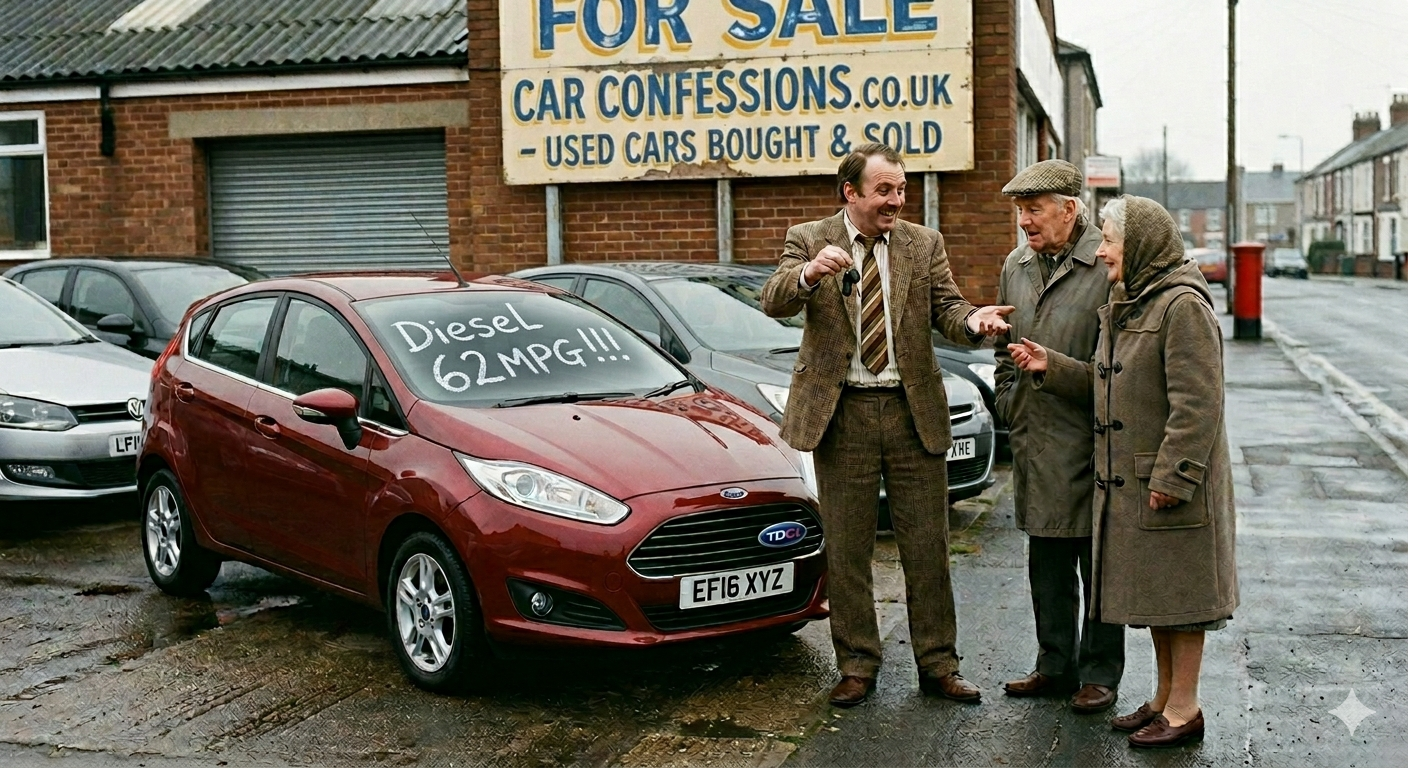
The Diesel Fiesta I Begged Them Not to Buy (And Sold Them Anyway)
I’ve sold a lot of cars in my time. Most of them, the customer drove away happy and I never thought about the transaction again. A few of them I still think about. This is one of those.
It was a diesel Fiesta, and selling it to them is one of the deals I’d take back if I could. Lovely retired couple, mid-seventies, both still sharp, both still driving. They’d come in on a wet Tuesday afternoon, the kind of afternoon where you’d sell a unicycle if someone walked through the door. They knew what they wanted before they sat down. A used Fiesta. Diesel. They’d seen the MPG figures online and they’d done their sums and they were giddy about it. Sixty-plus miles to the gallon. “We’ll never have to fill it up, Frank.”
I asked them how many miles a year they did. Five thousand, give or take. Mostly to the supermarket, the garden centre, the daughter’s house twenty minutes away. The occasional run to the coast in summer. And that was the moment I should have stopped the conversation dead.
Why a diesel Fiesta was the wrong car for them
If you’re doing five thousand miles a year, mostly short journeys, you should not be buying a diesel. Full stop. End of. I knew this. Every salesperson with more than six months on the job knows this. The reason is the DPF — the diesel particulate filter. It’s the bit of kit bolted to the exhaust that catches the soot diesels produce, and every so often it needs to burn that soot off in something called a regeneration cycle. To do that, the car needs to be driven hard and hot for a sustained period. Usually twenty minutes of motorway driving will do it.
Short trips to the Co-op don’t do it. School runs don’t do it. A pootle to the garden centre on a Sunday absolutely doesn’t do it. What happens instead is the DPF clogs up, the car throws a warning light, you take it to a garage, they charge you four figures for a forced regeneration or a new filter, and the cycle starts again. It’s miserable. It’s expensive. It turns what should be a cheap, sensible diesel fiesta into a money pit.
I told them this. I genuinely did. I sat them down and I said, look, I’ve got a petrol Fiesta out the back, same age, same colour, two hundred quid more, and it will suit you better than this diesel will. The MPG won’t be as headline-grabbing but you’ll never see a warning light and you’ll never spend a Saturday at Halfords trying to find someone to read the fault codes.
The bit where I should have pushed harder
They wouldn’t have it. The MPG figure had got into their heads and it wasn’t coming out. The husband had done a spreadsheet — he showed me on his phone, all neatly laid out — and on paper the diesel fiesta was saving them about £180 a year in fuel. He’d worked out the payback period. He’d even allowed for slightly higher servicing costs. What he hadn’t allowed for was a £900 DPF replacement at eighteen months, because nobody had told him about it. I had. But not loud enough.
And this is the confession. I caved. I knew the petrol was the right car. I told them once, clearly, in the showroom. And when they pushed back I said something like “well, it’s your decision, you know your own driving” and I went and got the keys for the diesel fiesta. Because it was Tuesday afternoon, because I had a target to hit, because the diesel had been sat on the forecourt for six weeks and my sales manager had been on at me to shift it, and because — if I’m being completely honest — once a customer has decided what they want, it’s easier to just sell it to them than fight them on it.
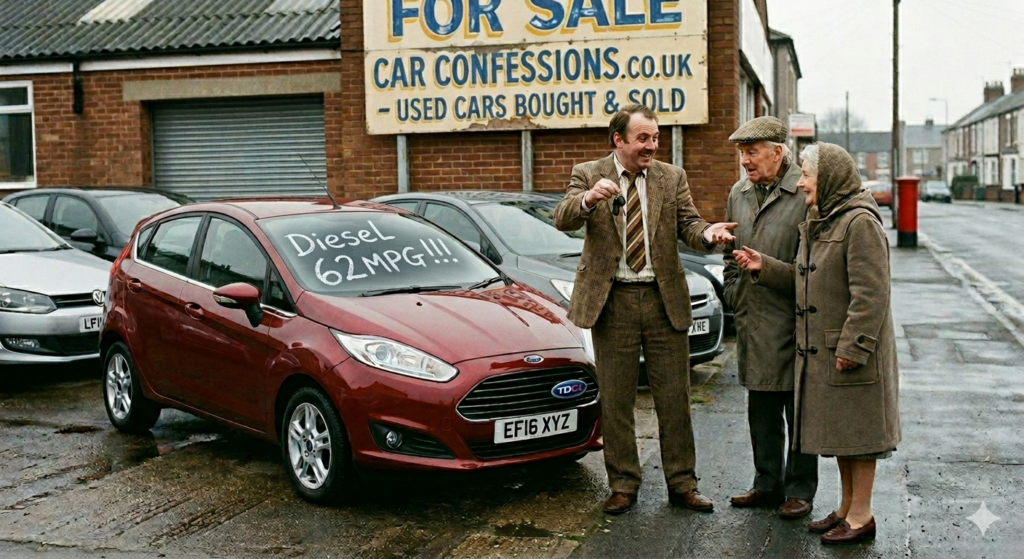
I should have said no. Not literally refused to sell it — I couldn’t have done that and kept my job — but I should have made the petrol case three times, not once. I should have asked them to come back the next day and think about it. I should have rung the husband on his mobile that evening and said, look, I’ve been thinking about this, please consider the petrol. I didn’t do any of those things. I shook his hand and I sold them the diesel fiesta.
What happened next, predictably
About fourteen months later the wife rang the dealership. The DPF light had been on for a fortnight. Could they bring it in. We got the car into the workshop and the technician told me what I already knew — the filter was clogged solid, it needed a forced regen and probably a new filter shortly after that. The bill came to just over a thousand pounds with the courtesy car and the diagnostics. The husband wasn’t angry. That was the worst bit. He was apologetic, embarrassed almost, as if he’d done something wrong by not driving the car enough. He hadn’t. We’d sold him the wrong car.
They part-exchanged it eight months after that. I wasn’t there for the trade-in but I saw the paperwork. They lost about three grand on it across two years of ownership, between the DPF bill, the depreciation hit from the warning light history, and the fact that low-mileage diesels with DPF issues are not exactly catnip to the trade. They bought a Yaris next. Petrol. They never came back to us. Some are suggesting this is the next thing Dealers will be on the hook for alongside Finance commissions and PPI – see my thoughts on that one here
Sometimes the advice is right even when the motive is wrong
Here’s the bit I want you to take away from this, because the whole point of writing these confessions down is for you to get something useful out of them and not just for me to feel better.
When a salesperson tells you not to buy a car — really tells you, not the fake “ooh, I’m not sure that’s right for you, but the one next to it which costs three grand more would be perfect” routine — listen to them. That is one of the very few moments in the entire car-buying process where their interests and yours are completely aligned, and you should treat it like gold dust.
Why? Because the salesperson has nothing to gain by talking you out of a sale. They lose commission. They annoy their manager. They miss a target. The only reason they’d do it is if they genuinely think you’re about to make a mistake that’s going to come back and bite them later. Returning customers who hate their car are a salesperson’s worst nightmare. They ring. They email. They come into the showroom on Saturdays to complain. They leave one-star reviews. A good salesperson would rather sell you the right car for less commission than the wrong car for more.
So if a salesperson says “honestly, that’s not the right car for your mileage” or “I’d think twice about that one if I were you” — that is not a negotiating tactic. That is them telling you something true at considerable cost to themselves. The motive isn’t pure — they’re protecting themselves from a future complaint as much as protecting you — but the advice is sound. Take it.
The questions you should be asking before you buy
If you take nothing else from this article, take these. Before you commit to a used car, ask the salesperson directly:
- “Given my mileage and the type of driving I do, is this diesel fiesta right for me?” Diesel for low mileage drivers is the obvious one, but it cuts the other way too — buying a tiny-tanked petrol city car for a 25,000-mile-a-year motorway commute is just as daft.
- “What goes wrong with this model? What are the known issues?” Every model has them. A salesperson who says “oh, nothing really” is either new or lying. Push back politely.
- “Is there anything on the forecourt today that would suit me better?” Genuinely the most powerful question you can ask. Watch their face.
- “Would you buy this car for your mum?” Old chestnut but it works. The hesitation tells you everything.
And if the answer to any of those makes them shuffle in their seat — pay attention. That’s the moment the truth is most likely to leak out.
The confession
I still think about that diesel Fiesta. Not because what I did was monstrous — it wasn’t, I gave them the right advice once and they overrode it — but because I knew, and I shrugged, and I let it go. The right thing would have been to keep pushing. To make them uncomfortable with the decision. To plant enough doubt that they went home and slept on it. Instead I went home myself, ticked the deal off in my head, and didn’t think about them again until the wife rang fourteen months later.
If you’re reading this and a salesperson has tried to talk you out of a car — properly, not as a pivot to a more expensive one — go home and think about it. There’s a decent c
Buying a used car? Don’t forget: