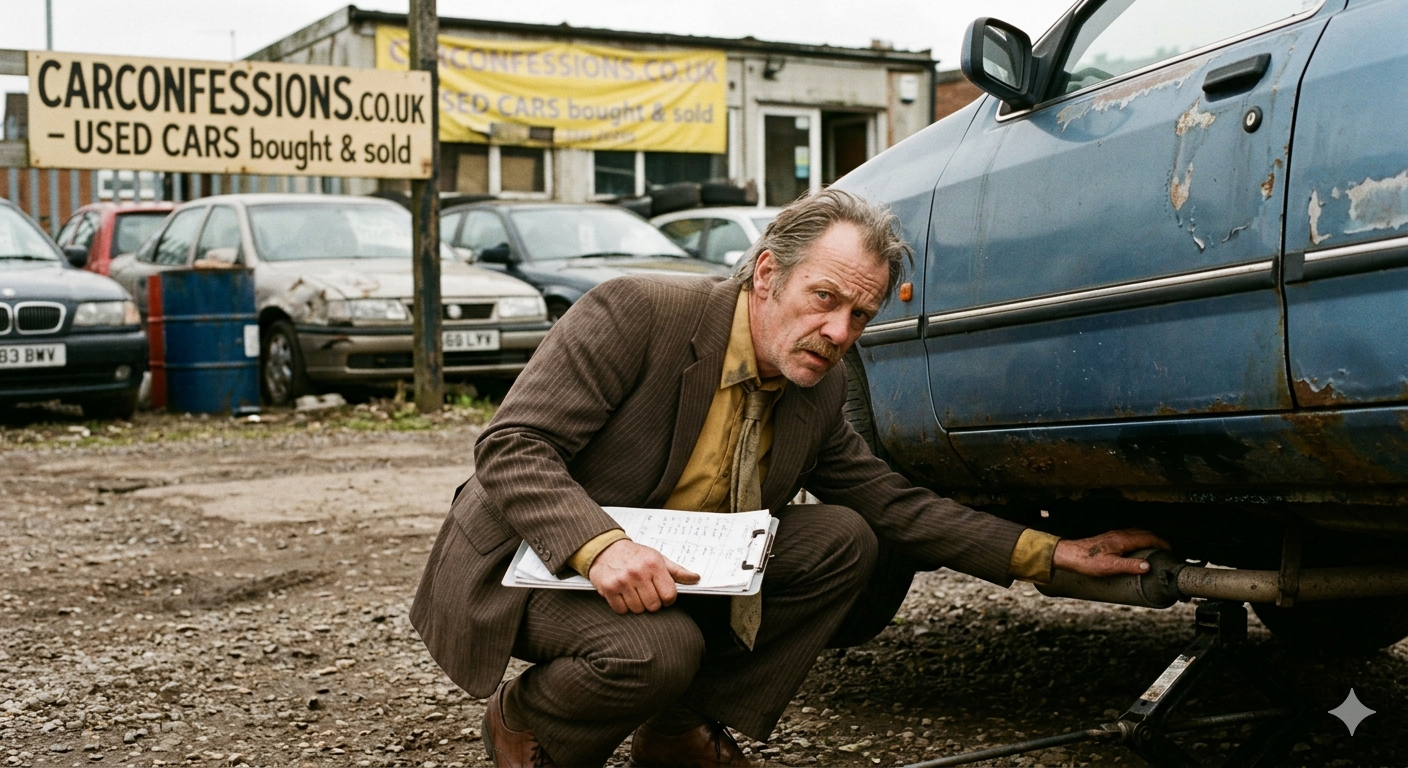
7 Used Car Checks Every Buyer Must Do Before Handing Over a Penny
Most people spend more time researching a new television than they do doing used car checks before they buy. A telly that goes wrong costs you a few hundred quid. A car that goes wrong can cost you thousands — and that’s before you factor in the emotional joy of discovering the one you just bought was written off twice and has £4,000 of outstanding finance on it.
I’ve seen buyers hand over cash for cars without so much as opening the bonnet. I’ve seen people skip a test drive because they didn’t want to seem rude. And I’ve watched good, careful people get badly burned because they didn’t know what to look for.
These are the seven checks that actually matter. Do all of them. Every time. Without exception.
Used car check 1: The MOT history
The free MOT history check at check-mot.service.gov.uk is genuinely useful and genuinely free. Plug in the registration and you’ll see every MOT the car has ever had — passes, failures, and the mileage recorded at each test. That mileage history is gold. If a car shows 94,000 miles at its last MOT three years ago and the seller is now claiming 76,000, you’ve just spotted a clocked car without spending a penny.
Look at the failure reasons too. Recurring issues — brakes failing year after year, the same suspension advisory popping up repeatedly — tell you something about how the car has been maintained, or not.
The MOT history check is free, takes two minutes, and has saved more people more money than any other single thing on this list. There is no excuse for not doing it.
Used car check 2: The HPI check
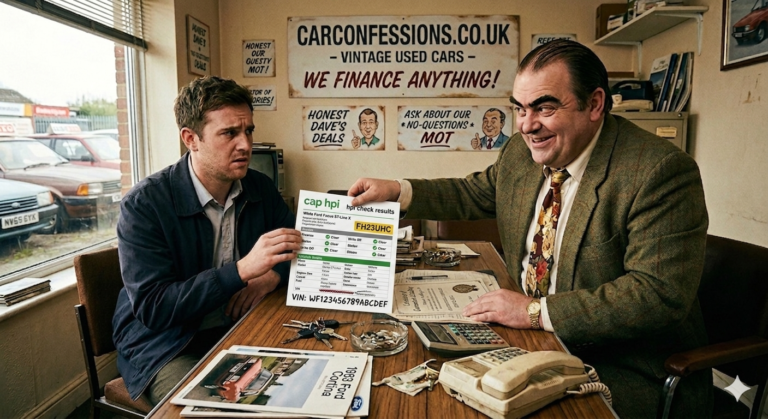
The MOT history tells you about the car’s test record. An HPI check tells you about its past life — and some of those past lives are not ones you want to inherit.
A proper vehicle history check will tell you whether the car has outstanding finance (meaning someone else’s lender technically owns it), whether it’s been written off and categorised by an insurer, whether it’s been reported stolen, and whether the mileage has been flagged as inconsistent. It’ll also confirm the car’s identity — that the VIN matches the registration, that it hasn’t been cut and shut from two accident-damaged cars.
This is the one check on this list that costs money. It’s worth every penny.
If you’re using dealer finance to buy, also read our guide on dealer car finance vs a personal loan — the legal protections are worth understanding before you sign anything.
Used car check 3: The V5C logbook
Ask the seller to send you a photo of the V5C (the registration document) before you even get in the car. You’re looking for three things:
First, does the name and address on the V5C match the person selling it? If you’re buying from someone’s house and the V5C shows a completely different address, ask why. It might be innocent. It might not.
Second, how many previous keepers has it had? One or two careful owners over ten years is very different from seven keepers in the same period. High keeper numbers aren’t automatically a dealbreaker but they warrant more questions.
Third, check the document reference number starts with a letter, not a number — documents starting with a number are older-style V5Cs which have been associated with fraud. If it’s a private sale, also check the seller’s details match their ID.
Used car check 4: The bodywork
Never, ever view a used car at night or in poor light. This is one of the oldest tricks in the book and it still works, because buyers feel awkward rescheduling. Don’t. Rescheduling costs you nothing. Buying a poorly repaired car costs you a fortune.
In daylight, walk slowly around the entire car and look along each panel from a low angle. You’re looking for ripples, colour mismatches, and overspray — signs of paintwork that’s been repaired. Check where the paint meets the rubber seals around doors and windows; rushed repair jobs often leave paint on the rubber. Look at the panel gaps — they should be even all the way around. Uneven gaps suggest the car has been in a significant impact.
Open every door, the bonnet, and the boot. Check the hinges and the edges inside the door frames for paint that doesn’t quite match the rest of the car.
A car that’s been in a minor bump and properly repaired is not necessarily a problem. A car that’s been badly repaired and hidden from you is a very different matter.
Used car check 5: The cold start
Always ask to start the car yourself, from cold. This is non-negotiable. If you arrive and the engine is already running — “just warming it up for you” — that’s a yellow flag. Some engines that smoke, rattle, or struggle to start are perfectly fine once they’ve warmed up. The seller knows this. You need to see the cold start.
Listen for rattles on start-up, particularly a tapping sound that fades after a few seconds — this can indicate worn timing chain tensioners, which are expensive. Watch for smoke from the exhaust: blue smoke means burning oil, white smoke (that isn’t just condensation on a cold day) can mean coolant getting into the engine. Neither is cheap to fix.
Let the engine idle for a few minutes and watch the temperature gauge. It should rise steadily to the normal operating range and stay there. If it creeps towards hot, there’s a cooling problem.
Used car check 6: The test drive
A proper test drive is at least twenty minutes on a route that includes town driving, a faster road, and if possible some braking from speed. A five-minute pootle around the block tells you almost nothing.
On the test drive, listen and feel. Brakes should stop the car straight and without pulling to one side. Steering should feel direct — any vagueness or wandering at speed suggests worn components. Listen for knocking from the suspension over bumps. Try the air conditioning — recharging it isn’t catastrophic but it’s a negotiating point.
On an automatic, does it change gear smoothly? Any hesitation, shuddering, or clunking is a concern. On a manual, does the clutch feel firm and progressive, or is it very high or very low in its travel? A clutch near the end of its life is a four-figure repair.
If the clutch or gearbox concerns you, factor it into your negotiation — our guide on how dealers negotiate will help you handle that conversation.
Used car check 7: The service history
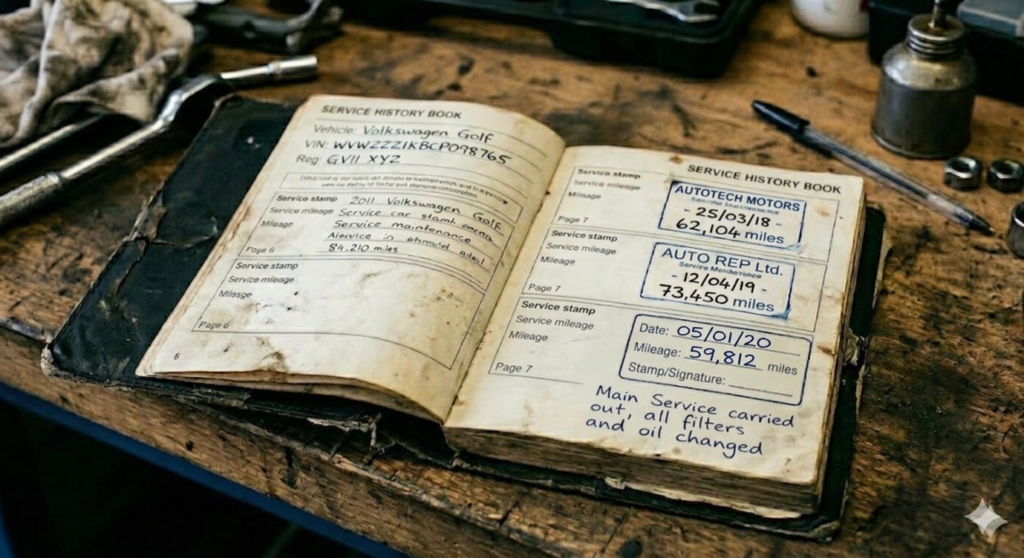
A full service history is worth money — not just because it proves the car has been looked after, but because it gives you a timeline to interrogate. When was the cambelt or timing chain last changed? Has it ever had new brake fluid? When were the tyres last replaced?
Gaps in the service history aren’t automatically disqualifying, but they need an explanation. “I serviced it myself” is fine if there are receipts. “I lost the book” is fine if the previous stamps can be verified with the garages that did them. “I just never got round to it” is an honest answer that tells you the car has been treated as a box that gets fuel, not a machine that needs maintenance.
For older cars, also ask about major preventative work — timing belt, water pump, coolant hoses. These are the things that don’t break often but cause catastrophic and expensive damage when they do. If they’re overdue, factor the cost into your offer.
Frank’s Confession
Here’s my confession about used car checks — and the buyers who didn’t do them.
I once sold a car to a very nice retired couple who didn’t ask a single question. Didn’t check the history, didn’t query the service book, didn’t drive it above thirty miles an hour on the test drive. It was a perfectly decent car and they were fine. But I remember thinking at the time: they have absolutely no idea how lucky they are. The car next to it on the forecourt had a history that would have made your eyes water. Same price. Same colour. If they’d pointed at that one instead, I’d have sold it to them just as cheerfully. That’s not malice — it’s just business. The burden of checking is on the buyer. Always has been.
Got a pre-purchase check that saved you from a disaster — or one you wish you’d done? Drop it in the comments below.
And before you go anywhere near a used car: check the free MOT history here. Two minutes. No excuses.
Before you buy — run these first:
4 Comments